
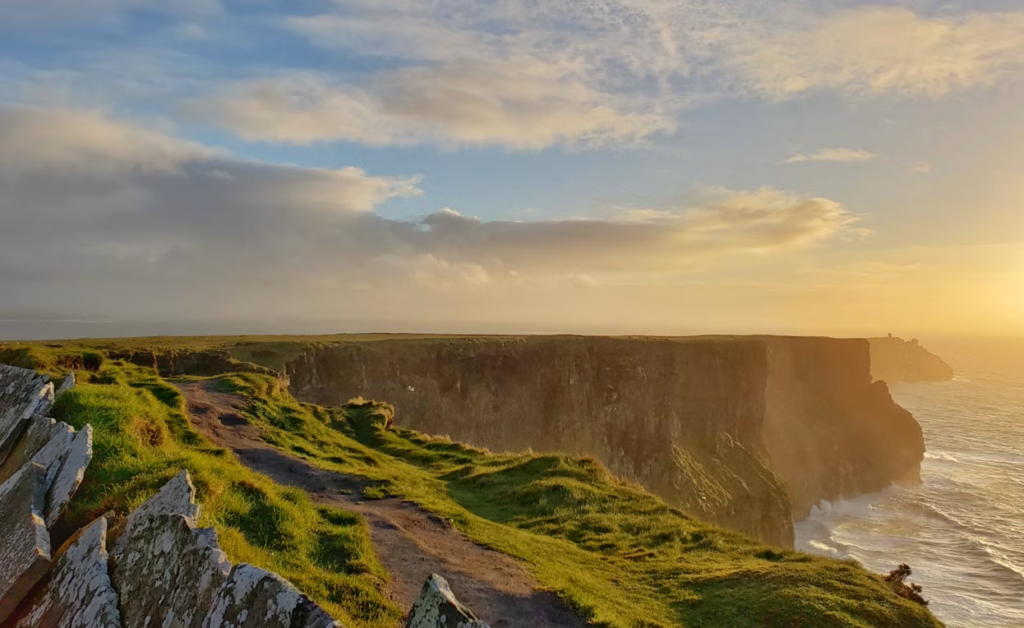
Ireland is widely regarded as one of the most stunning countries in the world, thanks to its verdant landscapes and dramatic coastlines. If you enjoy long walks and want to go on a few hikes, there are a few places that are better for it in the whole world. It is also a very popular tourist destination, with more and more people adding it to their bucket list. If you want to visit as well, keep in mind that you should book at least 10 days in order to truly experience as much of the country as you can. However, it’s also very likely that you’ll want to plan your next trip from the moment you arrive home so that you see all the other things you missed out on during the first journey.
The Burren
The Burren (which means “rocky district” in Irish Gaelic) is a karst landscape located in County Clare, on Ireland’s west coast. The area is well-known for hikers and those who enjoy natural landscapes and want to escape urban jungles, even if only for a little bit. If you want to travel to the Burren, make sure to activate your Holafly eSIM option for Ireland before you leave home, since you’ll want to stay connected and send photographs of the beautiful places you see to everyone back home. This place truly is one of a kind after all.
There are many accommodation providers in the area, from bed and breakfast establishments to hotels. Keep in mind that the area is environmentally sensitive, which is why you’ll be informed about preservation activities and the importance of eco-tourism in the area. Typically, this information comes in the form of “Leave No Trace” campaigns, which aim to protect the wildflowers, limestone landscapes, and archaeological monuments from damage. To ensure your trip is sustainable as well, make sure to follow designated paths when trekking, don’t pick flowers, don’t leave any rubbish behind, and respect the locals and their livestock. If you bring your dog, make sure they’re kept on a lead as well.
The most famous monuments in the Burren are the Poulnabrone dolmen and Caherconnell Stone Fort. The former goes back to the early Neolithic, while the second was most likely built between the 10th and the 12th centuries. The Gleninsheen gorget, a gold collar created around 700 BC and currently exhibited at the National Museum of Ireland, was also found at the Burren.
Glendalough
Glendalough is a glacial valley in County Wicklow that has become famous for a monastic settlement established in the 6th century. Between the early 19th and the mid-20th century, the site was the home to a lead mine, but is now a recreational area for picnics, rock climbing, and trail walking. Several monuments remain at Glendalough and can be visited, such as the gateway to the monastic city, a unique feature in all of Ireland. Originally two stories high, it has a stone inscribed with a cross on the inside, a sign that the area was a sanctuary.
The Round Tower, around 30 metres high, was built as a bell tower, storehouse, and refuge, while St. Peter and St. Paul’s Cathedral was built during several stages throughout history and was most likely finely decorated. St. Kevin’s Church has a church made out of overlapping stones, and there’s also St. Kevin’s Bed, a cave that runs 2 meters into the cliff rock, and which is believed to have been a retreat for the saint. Remains of the Miner’s Village can be visited too, but if you love natural landscapes, you’ll probably want to see the Poulanass river and waterfall first. The Wicklow Way, a long-distance trail that expert hikers love, passes through Glendalough, but you can also try the White Route and Miner’s Road Walk as well, if you prefer something a little less intense.
The Ring of Kerry
The Ring of Kerry is a 180-kilometre-long circular tourist route, situated in the county of the same name. There’s an established walking path known as the Kerry Way that you can follow, as well as a cycling path that will take you along quieter roads for the most part. These routes will allow you to stop by Lough Caragh in the Reeks District, where you can try sailing, as well as alongside the Bridia Valley and gaze upon Broaghnabinnia in the background. There are many scenic views at the Ring of Kerry, such as the Ladies View and the areas around the southwest. Many local bus companies provide trips throughout the summer, and since the roads are narrow, many see travelling with them as preferable to taking your own car.
The Aran Islands
This trio of islands is well-known for its ancient stone forts, traditional culture, and deep connection with the Irish language. Reaching them via ferry is simple and accessible, with crossings taking only about 40 minutes. The islands are home to many ruins, such as the Dún Aonghasa, a prehistoric hill fort that is an important archaeological site. Poll na bPéist, a naturally occurring pool that is perfectly rectangular and around 20 metres deep, is also popular among tourists despite the fact that swimming is strongly discouraged due to the underwater currents. The pool is connected to the Atlantic through underground channels, meaning that it empties and fills depending on the tides. Before leaving the islands, remember to buy a hand-woven Aran jumper as well, a traditional staple made entirely out of wool.
Dingle Peninsula
The Dingle Peninsula is the northernmost of its kind in County Kerry. Its western end is a Gaeltacht, a region where Irish Gaelic is the dominant language. Several writers were influenced by the region, including Peig Sayers, Pádraig Ó Siochfhradha, and Cáit Feiritéar. The Dún Chaoin village can be found at the westernmost part of Ireland and is linked to the town of Dingle (the only one on the peninsula) through a regional road. Like much of the rest of Ireland, several prehistoric and early medieval landmarks can be found here too.
Glanfahan is one of them, believed to date to the 5th century and home to several clocháns, dry-stone huts. Caherdorgan North, a National Monument, holds medieval stone buildings, and you can also stop by the Rahinnane Castle, a tower house north of the village of Ventry.
Ireland is a beautiful place to visit, nestled between valleys and home to both natural beauty and interesting landmarks. Some of the places you can visit and the things you can do are only available during certain seasons, so you might want to check before planning your trip. Regardless of when you visit, you will definitely not be disappointed.