
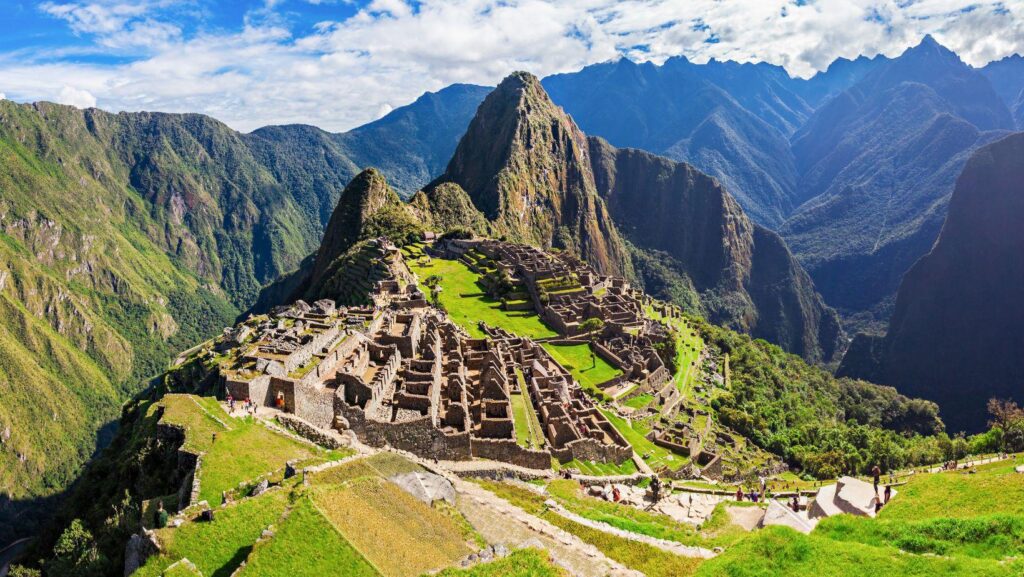
Few journeys have an arrival quite like Machu Picchu. Long before you step through the entrance to the ancient Inca citadel, the Andes begin setting the scene: mountain valleys, rivers, small communities, steep slopes, and landscapes that become increasingly dramatic as you travel deeper into the region.
However, planning that journey involves an important decision. Should you begin your trip to Machu Picchu from Cusco, or should you first travel through the Sacred Valley and board the train in Ollantaytambo?
Both approaches eventually lead to Machu Picchu Pueblo, also known as Aguas Calientes, but they fit very different itineraries. Understanding those differences can help you choose a route that works naturally with the rest of your trip.
Understanding the Journey to Machu Picchu
For most visitors traveling by rail, Machu Picchu Pueblo is the gateway to the archaeological site. From there, travelers typically continue by shuttle bus up the mountain to the entrance of Machu Picchu.
Travelers based in Cusco can use a combined road-and-rail journey. The first portion connects Cusco with Ollantaytambo, where passengers transfer to the train for the journey toward Machu Picchu Pueblo. Travelers who are already exploring the Sacred Valley can instead make their way directly to Ollantaytambo and begin the rail portion of their journey there.
Neither approach is universally better. The most practical choice depends on how you have structured the days before and after Machu Picchu.
Starting From Cusco: Convenient for City-Based Itineraries
Cusco is the starting point for many trips through southern Peru. Travelers often spend several days here visiting historic streets, archaeological sites, museums, markets, and nearby attractions before continuing toward Machu Picchu.
If your accommodation is in Cusco immediately before your Machu Picchu visit, beginning the journey from the city can be the most logical option. With Inca Rail's bimodal service, the route combines ground transportation from Cusco with the train journey from Ollantaytambo to Machu Picchu Pueblo. Instead of organizing the two main transportation stages independently, travelers can follow a coordinated connection.
This arrangement can be particularly useful for first-time visitors who would rather keep Cusco as their base instead of changing hotels before visiting Machu Picchu. There is also something appealing about watching the geography change as you leave the city. Cusco sits high in the Andes, while the journey toward the Sacred Valley gradually introduces a different landscape before the railway follows the Urubamba River toward Machu Picchu.
The trade-off is time. Starting in Cusco means adding the road journey to Ollantaytambo before boarding the train, so the overall trip is longer than beginning directly from the Sacred Valley.
Starting From Ollantaytambo: A Natural Choice for Sacred Valley Trips
Ollantaytambo offers a different experience. Located in the Sacred Valley, the historic town is much closer to the railway connection toward Machu Picchu. Travelers departing here board the train directly rather than beginning with the road transfer from Cusco.
That makes Ollantaytambo especially convenient if the Sacred Valley is already part of your itinerary. Instead of visiting the valley on a rushed excursion and returning to Cusco, you can spend a night in or around Ollantaytambo and continue toward Machu Picchu from there. This creates a natural progression through the region: Cusco, the Sacred Valley, Ollantaytambo, and finally Machu Picchu.
Ollantaytambo itself also deserves time. The town preserves narrow streets, stonework, agricultural terraces, and archaeological remains that reflect its Inca history. Staying overnight gives you an opportunity to explore without treating the town solely as a railway stop.
When departure day arrives, the logistics are relatively straightforward. From Ollantaytambo Station, trains travel directly toward Machu Picchu Pueblo, following the Urubamba River through increasingly dramatic mountain scenery.
What Does the Train Journey Look Like?
Whichever starting point you choose, Ollantaytambo becomes an important part of the rail journey. From here, the railway follows the Urubamba River toward Machu Picchu Pueblo. The scenery changes noticeably along the way, with the broader Sacred Valley gradually giving way to narrower valleys, steep mountainsides, dense vegetation, and cloud-forest landscapes.
For travelers researching the different Inca Rail Machu Picchu routes, the most useful question is therefore not simply which departure point is “best,” but which one fits the sequence of destinations already included in the itinerary.
If you are sleeping in Cusco the night before, starting there can reduce the need to relocate independently. If you are already spending time in the Sacred Valley, returning to Cusco simply to begin the journey again may add unnecessary travel.
How Much Time Should You Allow?
Timing matters when planning a Machu Picchu visit because transportation needs to work around your entrance time to the archaeological site. The direct train journey from Ollantaytambo to Machu Picchu Pueblo generally takes around 1.5 to two hours. Starting from Cusco adds the road portion to Ollantaytambo, making the complete journey considerably longer.
You should also account for check-in and boarding time, your arrival in Machu Picchu Pueblo, and the onward trip to the archaeological site. Avoid building an itinerary around extremely tight connections. Mountain travel can involve variables, and having some extra time makes the experience considerably more relaxed.
Should You Stay Overnight in Machu Picchu Pueblo?
Another decision is whether to visit Machu Picchu on the same day you arrive or spend a night in Machu Picchu Pueblo. A same-day journey may suit travelers with limited time, particularly when transportation and entrance schedules are carefully coordinated.
Staying overnight, however, can create more flexibility. You can arrive in Machu Picchu Pueblo, check into your accommodation, explore the town, and approach your Machu Picchu visit the following day without combining every stage into one long travel day.
Your choice of departure point can influence this decision. Someone beginning early from Ollantaytambo may have different scheduling possibilities from someone completing the longer journey from Cusco.
Think About Your Entire Peru Itinerary
It is easy to focus so much on Machu Picchu that the rest of the Sacred Valley becomes an afterthought. The valley contains archaeological sites, traditional communities, agricultural landscapes, markets, and mountain scenery worth experiencing in their own right. Places such as Pisac and Ollantaytambo can easily form part of a journey between Cusco and Machu Picchu.
A well-paced itinerary might begin with several days in Cusco, continue through the Sacred Valley, include an overnight stay in Ollantaytambo, and then proceed by train toward Machu Picchu.
Alternatively, travelers with fewer days may prefer to remain based in Cusco and use the coordinated connection toward the railway. The important point is to consider the route as part of the trip rather than merely transportation between two attractions.
Practical Tips Before You Travel
Once you have chosen your departure point, check train schedules and Machu Picchu entrance availability together rather than booking each component without considering the others. Reserve ahead when traveling during popular periods, as preferred train departures and Machu Picchu entry times can become limited.
Pack with mobility in mind as well. You may move between road transportation, railway stations, trains, accommodation, and shuttle buses during the journey. A compact daypack containing essentials such as water, sun protection, rain protection, travel documents, and your camera is much easier to manage.
Finally, double-check your boarding location. Travelers starting through Cusco's bimodal connection and those boarding directly at Ollantaytambo follow different departure procedures, so knowing exactly where and when you need to arrive can prevent unnecessary stress.
Make the Journey Part of the Adventure
Machu Picchu may be the destination, but getting there is one of the memorable parts of traveling through the Peruvian Andes. Starting from Cusco allows you to begin from the historic city and move gradually toward the Sacred Valley through a coordinated journey. Starting from Ollantaytambo gives you a more direct rail connection and fits naturally into an itinerary that already includes time in the valley.
Rather than choosing based only on journey length, look at the bigger picture. Consider where you will be staying, what you want to explore before Machu Picchu, how much time you have available, and how quickly you prefer to travel.
Choose the route that fits those plans, leave enough room in your schedule to enjoy the journey, and the trip through the Andes can become far more than simply the way you reach Machu Picchu.