
A hill day in the Highlands usually gets decided first thing in the morning, by whatever the cloud is doing on the tops. That’s awkward when your bed is in a hotel an hour’s drive from the start of the walk. If you’ve slept near the path instead, you’re the one who catches the clear window, and you’re back for a hot drink before the rain comes in.
That’s the case for motorhome hire in Scotland when the mountains are the reason you’re going. A motorhome gives you a kitchen, heating and somewhere to dry your boots, and it moves with you from one glen to the next. Here are the four areas I’d pick, all places where it helps to be able to move your base at short notice.
Glen Coe
Glen Coe is where most people start, and with good reason. The A82 runs straight through it, so you can see the walls of the glen from the driver’s seat before you’ve even parked. The National Trust for Scotland looks after the Glencoe National Nature Reserve, which holds eight Munros, among them Buachaille Etive Mòr, the Three Sisters and Bidean nam Bian. If you’re new to the glen, the Lost Valley walk gives you the drama without committing to a summit. The visitor centre is worth an hour on a wet afternoon too, with a 3D map that makes sense of the ridges you’ll be looking at all week. Outside, a reconstructed turf and creel house shows how Highland families lived in the century of the 1692 massacre that gave the glen its dark reputation. Give it two nights at a campsite in or near the glen, and keep the second day free for whichever ridge the forecast favours.
The Arrochar Alps
These are the closest of the four to Glasgow, at the head of Loch Long inside Loch Lomond and The Trossachs National Park. The Cobbler, with its odd rocky crown, is the hill everyone photographs, and on a clear day from the loch shore you’ll see why. It works well as a first or last stop, when you’d rather not spend half the day behind the wheel.
Trailhead parking near popular hills can fill quickly on a sunny weekend, and this is where sleeping close by pays off. Spend the night at a campsite near the loch and you’re on the path while day visitors are still on the road from Glasgow, with the van waiting for you and a pan of something hot when you come down.
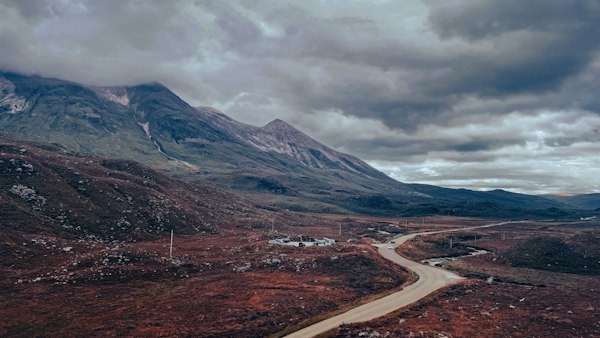
Photo: Jake Colling / Unsplash
Torridon
Torridon feels like another country after Glen Coe. Liathach and Beinn Alligin rise almost straight out of the sea lochs, built from Torridonian sandstone that’s around 750 million years old, and the reserve is known for pine martens and golden eagles. There’s a deer museum and an otter hide by the loch for the days when the tops are hidden.
The road in is narrow and slow, so you’ll be using passing places long before you reach the village. Pull in on your left, let the car behind past, and don’t count it as wasted time: this is the stretch where the scenery’s worth slowing down for.
These are proper mountains with scrambling on the ridges, so only tackle them with a decent forecast and some hillwalking under your belt.
Reading the mountain forecast
Your phone’s weather app won’t tell you what the wind’s doing up on the tops. The Mountain Weather Information Service forecast covers the Northwest Highlands, which includes Torridon, and the West Highlands, where you’ll find Glen Coe and Arrochar, and it’s written mostly as warnings about what you’ll actually feel on the ridge.
Check it after dinner. If the west forecast looks grim and the northwest looks calm, shift the van that evening so you wake up under the right hill.