
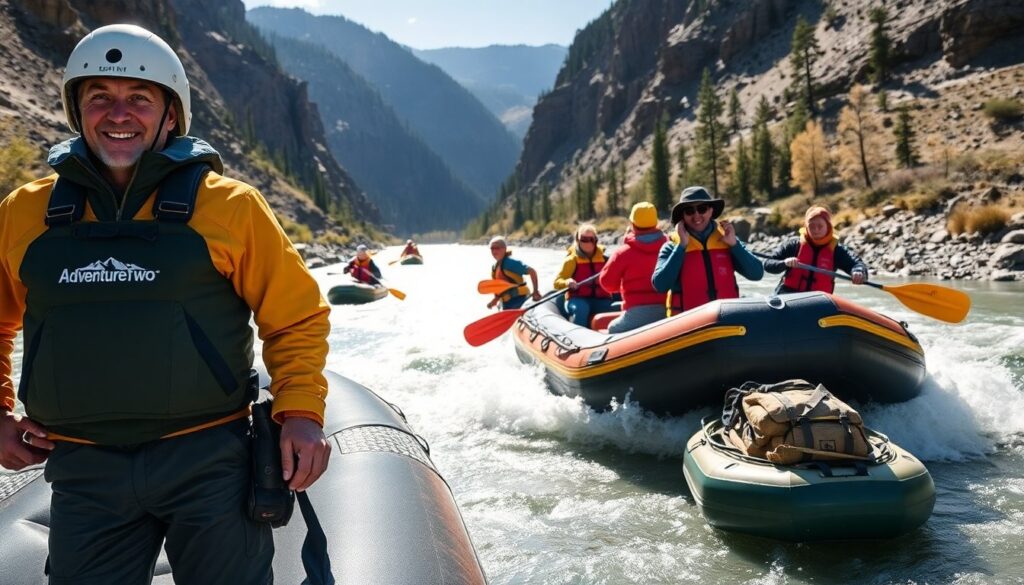
AdventureTwo rafting expeditions start with clear goals and steady guides. The company offers guided river trips, multi-day runs, and family floats. This guide states what travelers can expect. It covers rivers, trip types, difficulty, daily routines, safety, gear, fitness, pricing, and booking rules.
Key Takeaways
- AdventureTwo rafting expeditions offer a range of trips on major rivers like the Colorado and Salmon, categorized by difficulty from easy to advanced to suit all skill levels.
- Experienced and certified guides ensure safety with thorough briefings, rescue protocols, and consistent on-river support during every AdventureTwo rafting expedition.
- Participants receive clear preparation guidance including fitness recommendations, gear checklists, and appropriate clothing advice tailored for river conditions.
- Each day on an AdventureTwo expedition combines paddling challenging rapids and enjoying scenic nature stops, with meals and safety prioritized throughout the journey.
- Booking AdventureTwo rafting expeditions is streamlined through secure online deposits and waivers, with transparent pricing, reliable cancellation policies, and options for group and private charters.
- AdventureTwo offers add-ons such as fishing, hiking, and photography packages, enhancing the rafting experience for families, corporate groups, and schools.
What AdventureTwo Offers: Rivers, Trip Types, And Difficulty Levels
AdventureTwo rafting expeditions serve clients on several major rivers. They run trips on the Colorado, Salmon, Snake, and Rogue rivers. The company lists each river with clear descriptions of rapids, scenery, and season. They mark sections as easy, intermediate, or advanced.
Trip types include one-day floats, multi-day expeditions, family trips, and technical whitewater. One-day floats focus on scenic runs and mild rapids. Multi-day expeditions include camping and longer whitewater sections. Family trips use larger rafts and calm sections. Technical whitewater trips use smaller rafts, and guides use advanced maneuvers.
Difficulty uses the standard river scale. Class I and II describe calm water and small waves. Class III features medium waves and simple maneuvers. Class IV and V feature big drops, strong currents, and required skill. AdventureTwo rafting expeditions label each trip with a class rating. This labeling helps guests pick a trip that matches their comfort and skill.
Guides hold industry certifications. The guides complete swiftwater rescue training and first aid. The company assigns one lead guide per raft and one safety kayaker on advanced runs. They brief guests before each launch. The brief covers commands, what to do if someone falls out, and how to paddle together.
AdventureTwo rafting expeditions offer add-ons. Guests can add fishing, hiking, or photography packages. The company offers private charters for small groups. They provide custom dates for corporate teams and schools. The website lists group minimums and required deposits.
Pricing varies by river, trip length, and season. The company posts base rates and explains what the price includes. They include meals, gear, permits, and guide fees in most multi-day trips. They list optional costs like gratuities, transport, and personal gear rental.
A Day On An AdventureTwo Expedition: Itinerary, Safety, And On-River Experience
A day on an AdventureTwo rafting expedition follows a clear schedule. The day starts with a morning meeting, gear check, and safety talk. Guides fit life jackets and helmets. Guides assign seats and explain paddle commands.
The company moves guests to the put-in. The guide demonstrates how to brace, steer, and exit the raft. The raft launches within 30 to 90 minutes of the meeting. The river offers rapids, eddies, and calm pools. Guides point out natural features and wildlife during quieter sections.
Safety stays central during the day. Guides set a conservative pace and a clear chain of command. They station a safety boat or kayaker downstream on technical runs. The team uses throw bags, rescue ropes, and radios. Guides rehearse rescues before they head out for advanced routes.
Meals follow simple, high-energy menus. On multi-day trips, chefs cook breakfast and dinner at camp. Guides serve boxed lunches on the water. The company accommodates common dietary needs with prior notice.
The on-river experience mixes teamwork and free time. Guests paddle hard during rapids and rest in calm stretches. Guides offer short interpretation stops to explain geology and local history. Photographers or a guide take action photos on many trips. The company uploads photos after the trip.
Guests who flip or swim receive immediate assistance. Guides use set procedures to recover swimmers and gear. The protocol includes holding the raft, towing the swimmer to shore, and treating minor injuries. Guides carry first-aid kits and emergency oxygen on advanced expeditions.
The day ends with a debrief and a return to the launch. Guides discuss highlights and safety moments. Guests receive follow-up details about lost items, gratuity, and photo access.
How To Choose, Prepare, And Book: Gear, Fitness, Pricing, And Cancellation Policies
Guests choose a trip by matching skill to river class. They read trip descriptions and look at recent trip reports. The company recommends starting with a Class I–III trip for first-timers. Repeat guests may select Class IV or V options.
Preparation starts with basic fitness. Guests should walk three to five miles and do simple strength work for multi-day trips. Paddling requires core strength and shoulder endurance. The company posts fitness guidelines for each trip length and difficulty.
Gear falls into personal items and provided items. AdventureTwo rafting expeditions supply rafts, PFDs, helmets, dry bags, and basic safety gear. Guests should bring river shoes, a quick-dry top, sunscreen, a brimmed hat, and a change of clothes. The company offers wetsuit or drysuit rental in cold seasons.
Packing lists remain simple and clear. The list shows items to bring and items to leave at home. Guests should avoid cotton for main layers. They should pack small personal medical supplies and any prescription medicines. The company provides a checklist during confirmation.
Pricing links to season and group size. The company posts per-person rates for open-schedule trips and private rates for charters. Discounts appear for children, military, and off-season booking. The reservation page shows what the price includes and what costs extra.
Booking requires a deposit and online waiver. Guests complete a liability waiver and a medical form before the trip. The company accepts major cards and offers secure online booking. Group leaders call the office for large reservations to confirm logistics.
Cancellation policies remain transparent. The company refunds partial amounts for cancellations within posted windows. They offer credit for changes outside the full-refund window when possible. Weather and river conditions can force last-minute changes. The company notifies guests and offers rescheduling or refunds for trips that the guides cancel.
Guests who travel for a booked trip should buy travel insurance. The company recommends insurance that covers cancellation and evacuation. They provide contact details for local outfitters and shuttle services on the booking page.