
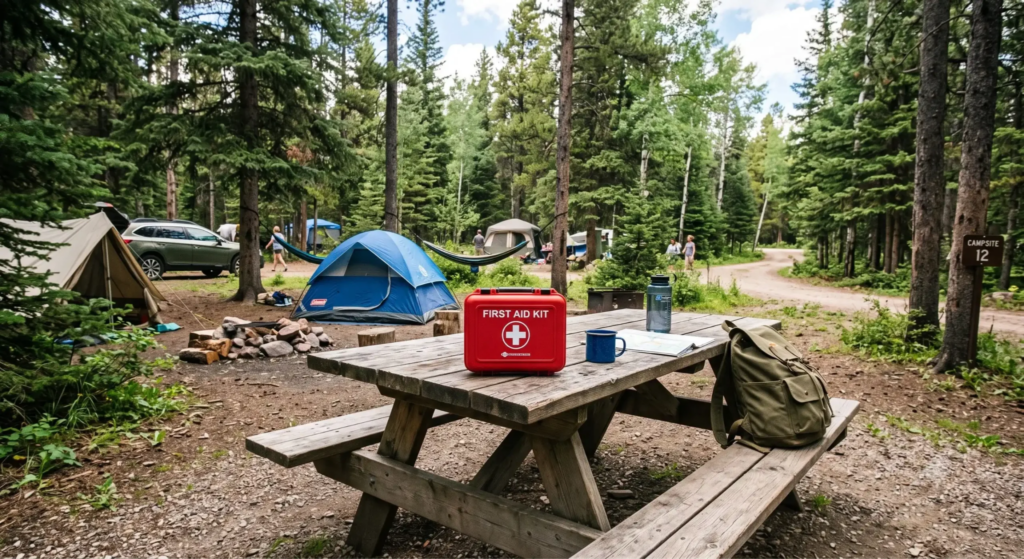
Calgary sits closer to the Rockies than almost any other Canadian city, and that closeness is exactly why so many locals treat the mountains like a backyard. Drive twenty minutes down Highway 1 and you’re on a trail with no cell signal, no ambulance nearby, and nothing but your own two hands if something goes wrong. Most trip checklists cover boots, layers, and bear spray, but few mention that booking First Aid Training Calgary before the season starts might matter more than any item on your pack list. It’s about closing a gap most hikers never plan for: the ten minutes right after someone gets hurt.
Key Takeaways
- Rescue times near Kananaskis and Canmore can stretch far longer than hikers expect.
- Basic first aid training closes the gap between an injury and real help arriving.
- Alberta’s OHS Act and WCB Alberta rules already push many Calgary workers toward certification.
- A first aid kit only helps if you know how to use everything inside it.
- Blended learning lets adventurers finish theory online and practice skills in person.
Why Does Distance From Help Change How You Pack?
Emergency response times matter more than most people admit. In the city, paramedics can reach you in minutes. An hour into the backcountry near Kananaskis or Canmore, that window stretches out, since a rescue team often has to reach you on foot or by helicopter.
That gap is what basic first aid training closes. It teaches you to stop bleeding, stabilize a sprain, recognize early signs of hypothermia, and keep someone stable until real help arrives. If your hiking partner went down with no signal, would you know what to do in the first five minutes?
What Does This Kind of Training Actually Cover?
Standard first aid and CPR courses aren’t built for outdoor use alone, but the core skills transfer to the trail: wound care and bleeding control, splinting sprains and fractures, recognizing heat exhaustion, hypothermia, and altitude illness, CPR and AED use, and deciding when to evacuate versus wait for rescue.
Heart & Stroke Foundation research has long shown that immediate bystander action, including CPR, meaningfully improves survival odds before paramedics arrive. That holds true on a quiet trailhead just as much as in a downtown office tower.
Does It Still Matter If You Only Hike a Few Times a Year?
Yes, maybe even more so. Frequent backcountry travelers build instincts over years of trial and error, and occasional hikers don’t get that repetition. A single overnight trip to Kananaskis Country, or a day hike with kids in tow, puts you far enough from help that basic skills stop being optional.
How Does Alberta Workplace Safety Law Connect to a Weekend Hike?
You might wonder what workplace rules have to do with hiking. More than you’d think, especially if you work in construction, energy, or another Calgary industry with real physical risk on the job.
Under the Alberta Occupational Health and Safety Act, employers already carry obligations around first aid readiness, and WCB Alberta outlines requirements based on worksite hazard levels. Calgarians who take certified courses for work in oil and gas or construction often carry that training straight into their weekend plans.
What Should Be In Your Backcountry First Aid Kit?
A kit is only useful if you know how to use what’s inside it. Check that yours includes gauze, adhesive bandages, medical tape, a compression bandage for sprains, tweezers, disposable gloves, an emergency blanket, and a basic guide card in case memory fails.
None of that gear replaces training. A kit full of supplies in untrained hands still leaves you guessing at the worst possible moment, on a trail where a phone might show zero bars.
When Should You Actually Book Certified Training?
The best time is before you need it. In practice, most people book a course ahead of a big trip, a new job requirement, or after a close call that shook them up a little.
Blended-learning options that combine online theory with in-person skills sessions work well for people juggling work and trip planning. You handle the coursework at home, then show up for a focused, hands-on practice session.
About Coast2Coast First Aid Inc.
Coast2Coast First Aid Inc. was founded in Toronto in 2014 and has grown into one of Canada’s most trusted names in emergency training, holding the Top 3 Canadian Red Cross Training Partner distinction for 2023, 2024, and 2025 and Heart & Stroke accreditation as a training partner. It has certified more than 150,000 students, maintains a 99.9% student success rate, and now operates 30+ locations across Canada and the United States. Digital certificates are issued within 48 hours of a successful evaluation, and every student gets a free 90-day skills practice retake.
If you’re looking for wilderness-ready first aid or CPR training near Capitol Hill Crescent NW, 16th Avenue, or the areas surrounding SAIT Polytechnic and Confederation Park, you may reach out to Coast2Coast First Aid Inc. in that area.
FAQs
Do I need wilderness first aid training, or is standard first aid enough for local trails? For most day hikes near Calgary and Kananaskis, a standard first aid and CPR course covers the basics, including wound care, splinting, and CPR. Wilderness certification goes further into extended-care scenarios and suits multi-day backcountry trips.
How long does a first aid certification usually last? Standard first aid and CPR certifications through the Red Cross typically remain valid for three years, though CPR renewal timelines can vary. Check your expiry date before a big trip, since lapsed skills won’t help much.
What’s the single most useful skill for backcountry emergencies? Bleeding control and CPR tend to top the list, since both address time-critical emergencies where minutes matter. The Heart & Stroke Foundation has consistently emphasized that early bystander CPR meaningfully improves outcomes.
Does workplace first aid training in Calgary cover outdoor emergencies too? The core skills, including CPR, wound care, splinting, and recognizing shock, apply whether you’re on a job site or a mountain trail. Courses built around WCB Alberta and Alberta OHS Act requirements target compliance, but the techniques carry over directly to recreational settings.
How far in advance should I book a course before a planned trip? Aim for a few weeks ahead, especially with a blended-learning format that includes an online theory component. That leaves time to finish coursework before your skills session.
This article is for general information and is not medical, legal, or claims advice. Workplace first aid and safety requirements vary by role and location; confirm specific obligations with Alberta OHS or WCB Alberta before finalizing a training plan.