

Long-term travel has always required more than courage. It demands planning, redundancy, and a quiet understanding that systems don’t always work the way they do at home.
Seasoned travelers know the pattern. A card flagged for “unusual activity” after crossing two borders in 48 hours. An ATM that runs dry in a rural province. A bank transfer that takes five days to settle while rent is due tomorrow. These are not dramatic failures. They are friction points, small reminders that financial infrastructure was built around residency, not mobility.
In 2026, a growing number of globally mobile professionals are adding another layer to their financial planning: Bitcoin.
Not as a rebellion against banks. Not as speculative theater. But as a strategic supplement.
Mobility Has Outgrown Traditional Banking
Remote workers, digital nomads, expedition photographers, humanitarian volunteers, their lives move faster than conventional banking rails.
International wire transfers can still be slow and expensive. Currency exchange spreads quietly erode budgets over time. Cross-border compliance triggers temporary account freezes with little warning. None of these issues are catastrophic in isolation. But over months or years of movement, they accumulate.
Bitcoin operates differently. It isn’t tied to a single jurisdiction’s banking hours or domestic infrastructure. Its ledger runs continuously, independent of national systems.
That distinction is increasingly relevant for people who rarely stay in one country long enough to establish deep financial roots.
Acquisition: The Step That Matters Most
For many travelers curious about incorporating Bitcoin into their financial planning, the most important question isn’t how to spend it, it’s how to acquire it responsibly.
Buying Bitcoin requires more than downloading an app. It means choosing a regulated exchange, understanding custody options, setting up multi-factor authentication, and learning how transaction fees work. For beginners especially, the educational layer matters as much as the purchase itself.
This is why many first-time buyers choose to get bitcoin at Kraken. The platform’s learning resources walk users through identity verification, funding methods, security setup, and the mechanics of purchasing BTC step by step. For someone preparing to travel long-term, that structure reduces avoidable mistakes. It shifts the process from impulsive acquisition to informed participation.
And informed participation is the only version that makes sense for travelers.
Bitcoin as a Reserve, Not a Replacement
Among experienced nomads, Bitcoin is rarely treated as daily spending money. Instead, it functions as a parallel reserve, a portion of capital held outside traditional banking channels.
The logic mirrors travel philosophy itself: redundancy creates resilience.
If a domestic bank card stops working abroad, alternative access matters. If local currency experiences sharp devaluation, diversified holdings can soften exposure. Bitcoin does not eliminate volatility, it introduces a different risk profile, but for globally mobile individuals, it offers independence from any single national monetary system.
Research from the World Economic Forum has noted the accelerating integration of digital assets into financial ecosystems worldwide, particularly in regions where mobile-first banking adoption is high. In parts of Latin America, Africa, and Southeast Asia, crypto infrastructure often develops alongside, not after, traditional systems.
For travelers spending extended time in these regions, that parallel development becomes visible quickly.
When Infrastructure Is Unpredictable
AdventureTwo readers know that remote beauty often correlates with limited infrastructure.
In a mountain town with unstable connectivity, cash may still dominate. In a coastal village, ATMs may be few and unreliable. In certain countries, capital controls or banking restrictions can complicate transfers from abroad.
Bitcoin does not magically solve these realities. Internet access is still required. Volatility remains a factor. But it introduces optionality. Optionality matters when certainty is scarce.
Security Is a Travel Skill
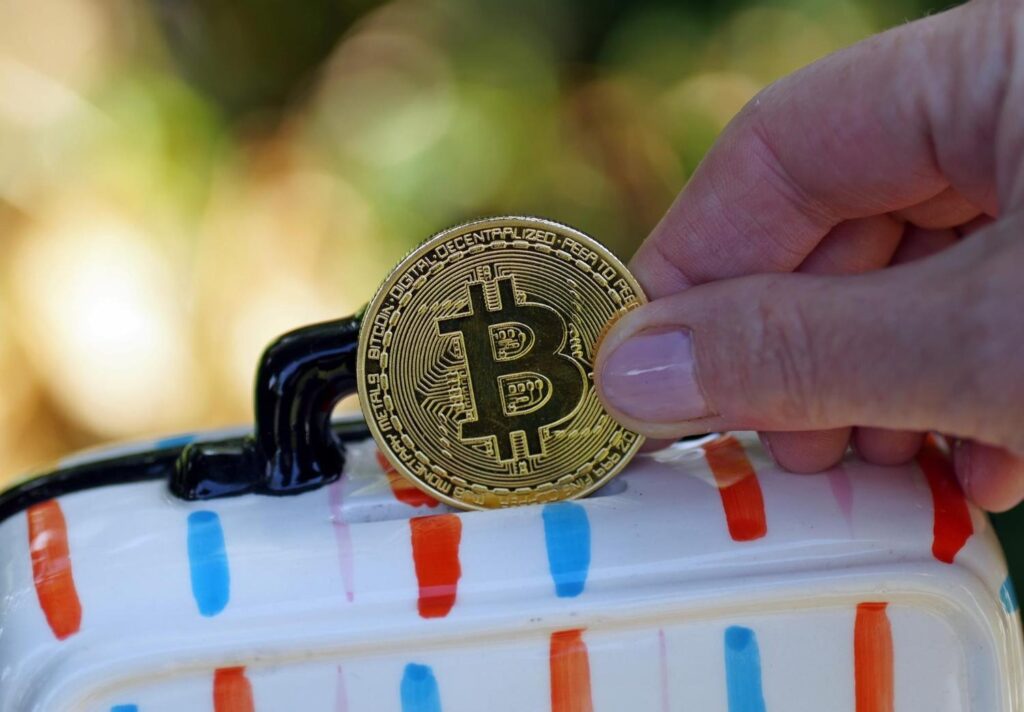
If you can secure a passport, you can learn to secure digital assets.
The fundamentals are straightforward but non-negotiable:
- Two-factor authentication on exchanges
- Hardware wallets for larger holdings
- Offline backups of recovery phrases
- Avoiding sensitive transactions on unsecured networks
This is not paranoia. It is hygiene. Modern travel already demands digital literacy, from VPN usage to encrypted communication. Crypto security is an extension of that literacy.
Inflation, Currency Exposure, and Long Horizons
Traveling for a few weeks is one thing. Building a location-independent life for years is another.
Currency exposure becomes tangible over time. Inflation, exchange rate shifts, and policy changes impact savings more noticeably when income and spending cross multiple jurisdictions.
Bitcoin is frequently discussed as a hedge against fiat debasement, though its short-term volatility makes it unsuitable as a sole store of value. Most prudent travelers who integrate it do so as a measured allocation within a broader portfolio that includes cash reserves, diversified investments, and insurance buffers.
Financial maturity, not enthusiasm, defines successful use.
Sustainability and the Evolving Energy Narrative
Criticism around Bitcoin’s energy consumption remains valid and part of responsible discourse.
Yet the ecosystem is evolving. A growing share of mining operations utilize renewable energy sources or capture stranded energy that would otherwise go unused. The conversation has shifted from binary condemnation to measurable efficiency and transparency.
Just as conscientious travelers consider the environmental impact of flights and accommodations, thoughtful engagement with digital assets requires awareness of the energy debate, and the data behind it.
A Subtle Shift in How We Define Preparedness
Travel preparedness used to mean traveler’s checks and backup credit cards. Then it meant digital banking apps and multi-currency wallets. Now, for some, it includes decentralized assets. Not as an ideology. As insurance against friction.
The explorers who thrive long term are rarely reckless. They are strategic. They diversify risk. They anticipate failure points. They carry backups, physical and digital. Bitcoin fits into that mindset not as a headline-grabbing revolution, but as a quiet layer of optionality.
The Financial Frontier Is Expanding
Adventure has always involved expanding maps.
Today, the expansion includes financial systems. As global mobility becomes more normalized, so too does the need for tools that operate across borders without requiring permanent attachment to one jurisdiction.
Acquiring Bitcoin through a structured, regulated platform is simply the first step in understanding that system. What follows is education, discipline, and measured integration.
For travelers planning extended journeys in 2026 and beyond, the question is no longer whether digital finance exists. It is whether understanding it adds resilience to the journey.
For many, the answer is increasingly yes.