
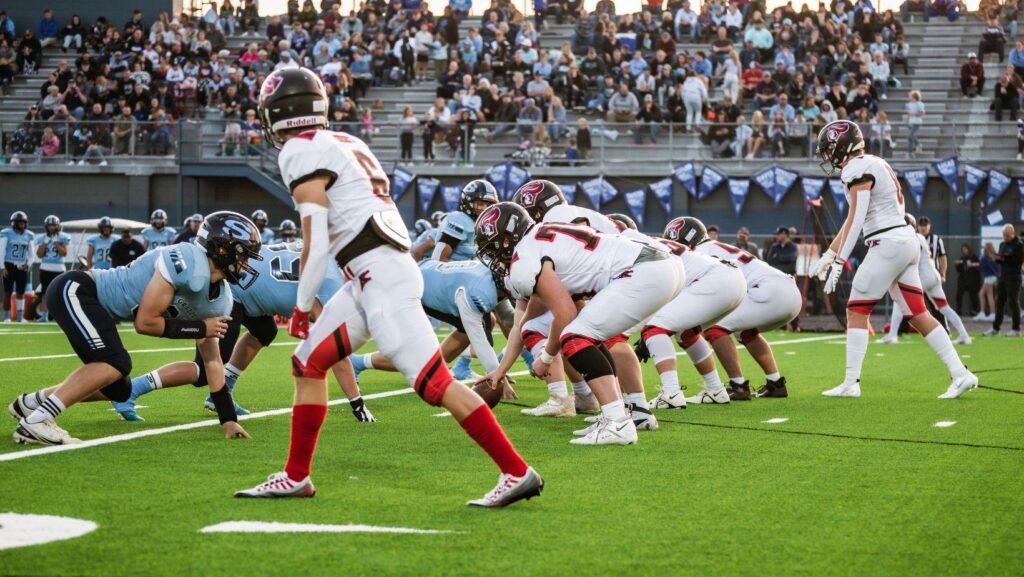
An hour before kick-off, a football match can suddenly look very different. The teams have not stepped onto the pitch, the score is still 0–0, yet one piece of information can change the entire conversation: the starting line-ups. A key striker is missing. A midfielder expected to start is on the bench. A manager has selected three central defenders instead of the usual four-player back line.
For supporters who follow football closely, a line-up is much more than a list of eleven names. It offers the first real indication of how a manager may approach the game. Previous results and statistics describe what a team has already done, while the starting eleven provides clues about what it might try to do next.
That is one reason line-up information has become so prominent across digital sports services. Platforms such as Parimatch operate within a wider online sports environment where users expect team news and match information to be easy to find, while services including Flashscore and Sofascore organize line-ups alongside formations, results, and match statistics. Reading those eleven names carefully can reveal considerably more than simply who is available to play.
Why Starting Line-Ups Matter
Starting line-ups matter because football teams rarely perform in exactly the same way regardless of personnel. Two players occupying the same nominal position can interpret that role very differently.
One full-back may constantly move forward and provide width. Another may remain deeper and concentrate on defensive positioning. A midfielder could be comfortable controlling possession, while his replacement may prefer direct forward passes and physical challenges.
The formation shown before kick-off is therefore only the beginning. The players selected to fill those positions often reveal more about the intended approach.
A useful first check includes:
- players missing from the usual starting eleven;
- unexpected starters;
- changes in formation;
- players returning from injury;
- regular starters placed on the bench;
- positional changes involving familiar players.
None of these details guarantees how the match will develop. They simply provide useful context before it begins.
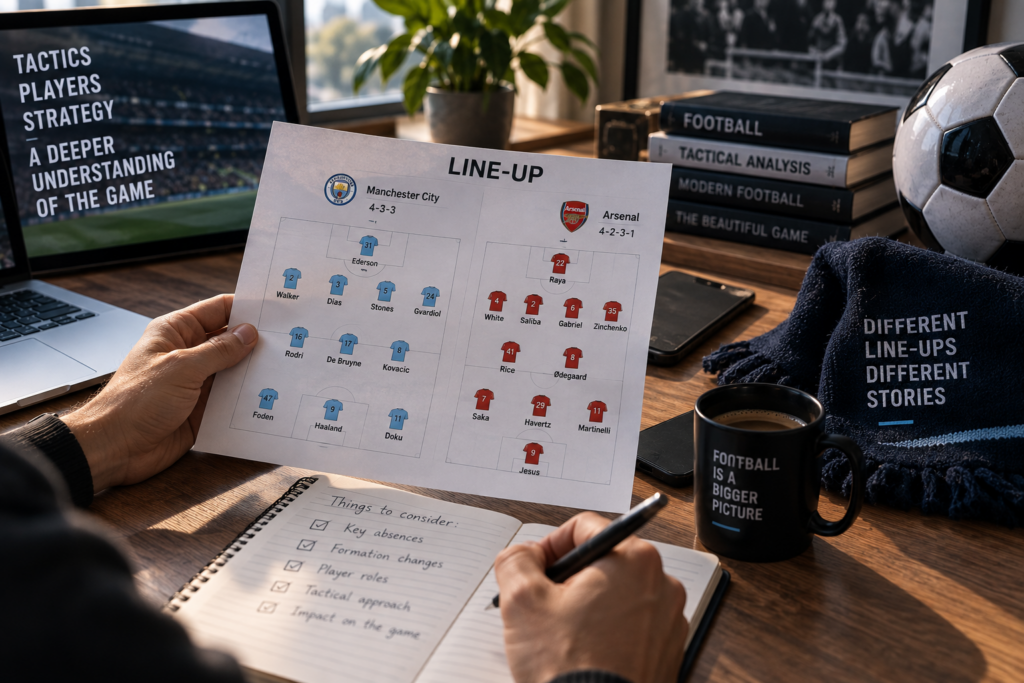
A Formation Is Only a Starting Point
A formation is only a starting point because football is far more fluid than the familiar numbers suggest. A 4-3-3 graphic looks clear on a screen, but players rarely remain in those exact positions for 90 minutes.
When one team has possession, a full-back may move into midfield and effectively change the shape. A winger may move centrally, allowing another player to occupy the wide area. When possession is lost, the same team could quickly return to a completely different defensive structure.
This makes formations useful but limited.
Important: A formation graphic shows where players are broadly expected to start. It should not be treated as a fixed map of where they will spend the entire match.
The identity and characteristics of the selected players provide the additional information needed to interpret that formation.
One Missing Player Can Affect Several Positions
One missing player can affect several positions because managers often solve an absence by reorganizing more than one role. If a first-choice left-back is unavailable, for example, the obvious solution is to select another left-back. In practice, the manager may move a central defender wide, change the formation, or ask a midfielder to provide additional defensive support.
Consider a simplified example:
|
Usual Selection |
New Selection |
Possible Effect |
|
Attacking full-back |
Defensive full-back |
Less width in attack |
|
Creative midfielder |
Defensive midfielder |
More protection, less creativity |
|
Central striker |
Mobile forward |
More movement between positions |
|
Experienced defender |
Young replacement |
Different defensive organization |
These are possibilities rather than predictions. Football tactics depend on many factors, including the opponent and the manager’s instructions.
Still, the table illustrates why simply noticing that “one player is missing” may not tell the whole story. One change can create a chain reaction across the team.
Why the Bench Matters Too
The bench matters too because the starting eleven only describes the beginning of the match. Modern football allows managers to make several substitutions, giving them opportunities to alter the game as it develops.
A strong bench may contain players with very different characteristics from those starting. A fast winger could be introduced against tired defenders. An additional midfielder might help a team control possession. A tall forward could change how the side attacks cross late in the game.
The available substitutes can therefore provide clues about the options a manager has kept in reserve.
Example: Two teams may start with similarly strong elevens, but one could have several experienced attacking players available from the bench while the other has limited alternatives. That difference becomes more relevant as the match progresses.
This is particularly important during busy periods of the season when fatigue and squad rotation become more common.
How Digital Platforms Present Line-Up Information
Digital platforms present line-up information visually because a list of names alone provides limited tactical context. Seeing players arranged on a pitch makes it easier to understand the expected structure immediately.
Services such as Flashscore and Sofascore commonly provide team selections for supported football matches. Depending on the competition and available data, users can also find information about substitutes, player positions, and other match details.
The visual approach is especially useful on mobile devices. Instead of reading through several paragraphs of team news, a user can open the match page and quickly identify who starts, who is missing, and how the players are arranged.
This is a good example of sports technology simplifying information rather than merely adding more of it.
Late Team News Can Change the Picture
Late team news can change the picture because expected line-ups are not the same as confirmed line-ups. In the days before a match, journalists and sports websites often discuss likely selections based on training reports, previous matches, and injury information.
Those predictions can be useful, but surprises are common.
A player thought to be injured may recover in time. Someone expected to start may feel discomfort during the warm-up. A manager may simply make a tactical choice that few observers anticipated.
For this reason, confirmed team information carries more weight than an earlier prediction. Once the official selection is available, previous assumptions about the match may need to be reconsidered.
Player Roles Matter More Than Names Alone
Player roles matter more than names alone because reputation does not explain how someone will be used in a particular match. A well-known attacker could start in a deeper position than usual. A midfielder normally associated with attacking play may receive a more disciplined defensive role.
Looking at recent matches can help provide context. If the same player has occupied a new position several times, the change may be part of a broader tactical adjustment rather than a one-off experiment.
This is where line-ups become more informative when combined with other sports data. Recent formations, substitutions, and match statistics can help show whether a tactical pattern is developing over time.
Expert Tip: When a starting eleven looks unusual, checking the team’s previous two or three matches can often explain the change. What appears surprising in isolation may already be part of a developing pattern.
Q&A: Reading Football Line-Ups
When are football line-ups usually most useful?
Confirmed line-ups are most useful shortly before kick-off because they replace earlier predictions with the players actually selected to start the match.
Does a formation reveal a team’s exact tactics?
No. It provides a basic structure, but player movement and tactical instructions can change the shape considerably during different phases of play.
Is an important player being absent always a major disadvantage?
Not necessarily. The effect depends on the replacement, the team’s tactical options and the opponent. Some squads can adapt to absences more easily than others.
Why should substitutes be checked?
Substitutes show which alternatives are available if the manager needs to change the approach during the match.
Conclusion
A starting line-up looks simple: eleven players arranged on a screen before kick-off. Yet it can contain some of the most useful information available before a football match begins.
The interesting part is not simply identifying which famous players are present. It is noticing what has changed. A missing defender, an unexpected midfielder, a different formation, or an unusually strong bench can all provide context for what follows.
Digital sports platforms have made this information much easier to access, but reading it still requires a little interpretation. The formation provides the outline. The players, their roles, and the choices available from the bench fill in the details. Before the first whistle is blown, the team sheet has already started telling the story.
Title: Why Starting Line-Ups Can Change the Way a Football Match Is Read
Meta Description: Discover why football starting line-ups matter and how formations, player roles, absences, and substitutes can provide valuable context before kick-off.